
Last Updated: May 12, 2026
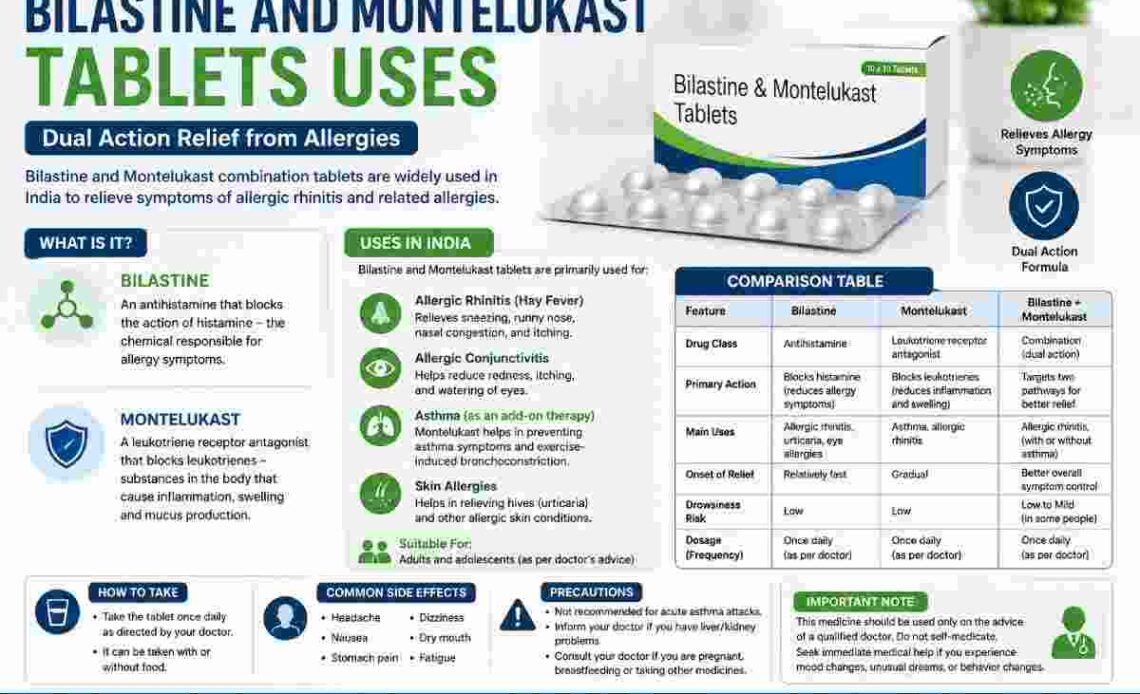
The allergy season can be extremely tiring. A blocked nose, continuous sneezing, running and watering of eyes, the stuffiness in the face can make even a normal day stretch endlessly. The combination of bilastine and montelukast tablets is one of the many treatment options being discussed among practical choices in India to manage allergic rhinitis; both bilastine and montelukast act by blocking the H1 receptor, which causes sneezing, nasal blockage, etc., whereas montelukast acts by blocking the leukotriene pathway responsible for allergy and inflammation of airways. Indian product leaflets suggest treatment of allergic rhinitis in adults and some of the branded leaflets include its indication in 15 years old and above.
What Is Bilastine and Montelukast?

Bilastine is an antihistamine and used for symptomatic treatment of allergic rhino-conjunctivitis and urticaria. In plain terms this means it is used to reduce the response in the body that histamine causes such as a sneeze, runny nose or itchy eye or hive.
Montelukast is a leukotriene receptor antagonist and it reduces the response of the leukotrienes which are chemicals which contribute to asthma and rhinitis symptoms. In plain terms it reduces the response to leukotrienes attaching to the specific receptors on the cell walls which leads to swelling in the airways/nasal passages. Drug information sources say it is indicated for asthma and allergic rhinitis, while its FDA indication has indications for both seasonal and perennial allergic rhinitis.
Hence the combination product, working on two inflammatory pathways-the histamine one and the leukotriene one. This is why most doctors consider it for tricky cases of allergy symptoms especially with blocked nose symptoms.
Bilastine and Montelukast Tablet Uses in India

In India this fixed dose combination is mainly promoted as indicated for allergic rhinitis. An Indian leaflet says that this is used for allergic rhinitis in adults. Another Indian leaflet meant for patients gives a clearer indication of this use, i.e., to relieve hay fever-like conditions such as sneezing, itchy or watery or running nose, blocked nose, and red or watery eyes in patients aged 15 years or older, as well as in adults.
In terms of readers, the most appropriate application may be considered as one in which all of the small sniffle here and there are replaced by the larger group of symptoms of allergic rhinitis that often accompanies nose blockage and watering eyes. Research also looks into this particular combination in Indian allergic rhinitis patients, and a phase III study showed good tolerability and efficacy.
Comparison Table: Bilastine vs Montelukast vs the Combination
| Feature | Bilastine | Montelukast | Bilastine + Montelukast Combination |
| Drug class | Antihistamine | Leukotriene receptor antagonist | Two-in-one allergy medicine |
| Main action | Blocks histamine effects | Blocks leukotrienes | Targets two allergy pathways |
| Common use | Allergic rhinitis, allergic eye symptoms, urticaria | Asthma and allergic rhinitis | Allergic rhinitis in Indian product leaflets |
| Best known for | Itching relief, Sneezing relief, Watery eyes relief, Hives relief. | Advice on Allergy Associated Inflammation and Airway symptoms | Wider range of symptoms controlled on the one tablet. |
| Common practical use | Day time relief of hayfever | Frequently utilized to aid the body with asthma/allergy conditions | Is typically used when symptoms of nasal congestion are accompanying those of allergy |
| Important caution | Can cause headache or drowsiness in some people | Mood/behavior changes are a known warning | Contains montelukast, so the same caution applies |
| Food advice | Some product leaflets recommend taking it away from food/fruit juice | Can be taken as directed by doctor | Indian leaflets advise taking it one hour before or two hours after food or fruit juice |
| Age labeling in India | Depends on product | Depends on indication and product | Some Indian leaflets say adults; some say adults and adolescents 15+ |
When Doctors May Consider This Tablet
This combination may make sense when someone has allergic rhinitis with a mix of sneezing, blocked nose, runny nose, itchy eyes, and recurring allergy discomfort. Bilastine provides relief from the histamine component of the allergy, and montelukast provides control over the leukotriene component which accounts for one of the reasons the combination is prescribed in practice for patients wishing for once a day simplicity.
It must also be appreciated that allergic rhinitis is not just ‘a small cold like condition’. For many it can cause sleeplessness, work, and study distraction and discomfort. Hence a single one daily dose tablet can be appealing when symptoms recurrently occur during pollen, dust or other triggers. Indian product literature for the combination recommends once-daily oral use.
How to Use It Safely
Indian prescribing information for the combination says the tablet is generally taken once daily, swallowed with water, and taken one hour before or two hours after food or fruit juice. The same leaflet says treatment for allergic rhinitis should be limited to the period of allergen exposure, and seasonal symptoms may allow treatment to be stopped once symptoms settle and restarted when they return.
A few safety points matter here:
- Do not use it for an acute asthma attack. Product information for Indian combo brands says it is not meant for sudden asthma attacks.
- Monitor for fatigue and dizziness. Sleepiness, dizziness, headache, nausea and GI symptoms are listed as potential reactions in leaflets distributed in India.
- Monitor for changes in mood or behavior. There is a Black Box Warning for severe mental health effects associated with montelukast, such as mood changes and suicidal ideation or behavior. It should only be used for allergic rhinitis when other allergy medications have not been effective or are not tolerated.
Common Side Effects to Know
Although many users may consider allergy tablets just a plain medication, there’s definitely trade-offs to be expected. Side effects listed in Indian product leaflets of bilastine-montelukast combination include headache, somnolence, dizziness, nausea, diarrhea, xerostomia, abdominal discomfort and skin rash. Warnings of montelukast included behavioral and mood alterations: anxiety, irritability, disturbance of sleep, abnormal dreams, depression, and, rarely, hallucinatory experiences and other neuropsychiatric symptoms.
Here’s a way you can perhaps keep track of which side effects may have come from which medication: bilastine-induced symptoms might more commonly involve sleepiness, headache or dizziness while montelukast carries an increased risk of behavioral and psychiatric changes which necessitates a greater degree of care.
Who May Benefit Most
This medicine may be more suitable for people who have:
- persistent allergic rhinitis symptoms
- both sneezing and nasal blockage
- watery, itchy eyes along with nasal symptoms
- Recurring annual allergic disease
- advice from the doctor to take a dual-action tablet rather than two separate medicines
This is generally not the first choice of tablet to take without instruction for someone with any mood problems, with significant kidney or liver dysfunction, pregnancy, breastfeeding or other medical conditions. Advice from Indian leaflet to seek doctor’s advice in renal impairment; care with montelukast warnings for anyone with previous mood and sleep disorders.
Practical Takeaway
In India, if someone looks up bilastine and montelukast tablets uses the answers will likely be fairly clear. It will be used for allergic rhinitis. This can include both a broad, irritating, and bothersome range of symptoms that can impede daily activities. Bilastine addresses the histamine component of allergy, montelukast the leukotriene component and some individuals may experience a broader therapeutic pattern than is available from a single ingredient tablet.
Also the medicine should be respected as neither for an acute asthma attack, it can produce dizziness and drowsiness and it does have a major psychiatric warning on montelukast that can not be overlooked.
Final Word
When a patient suffering from allergic rhinitis in India finds the symptoms of his disease chronic in nature and their impact begin to significantly disturb his daily routine, the availability of tablets containing bilastine and montelukast can indeed be an additional option. This fixed dose combination is easy to use and only needs to be taken once a day, and has been planned to target the double pathway of allergy. However, medical advice and the timing as well as adverse effects related are always safest way to use this combination.