
Last Updated: August 7, 2026
Post-acute withdrawal syndrome is surprising because it happens when you just thought you were getting through the worst part. You’ve finished detox treatment, the physical pain is history, and a few weeks have gone by without a drop passing your lips. Then wham! Anxiety, fuzzy thinking, and the blahs set in like a second wave you never saw coming. Most people aren’t prepared for it and don’t understand it, but doing so can make all the difference.
Acute withdrawal ends, PAWS begins
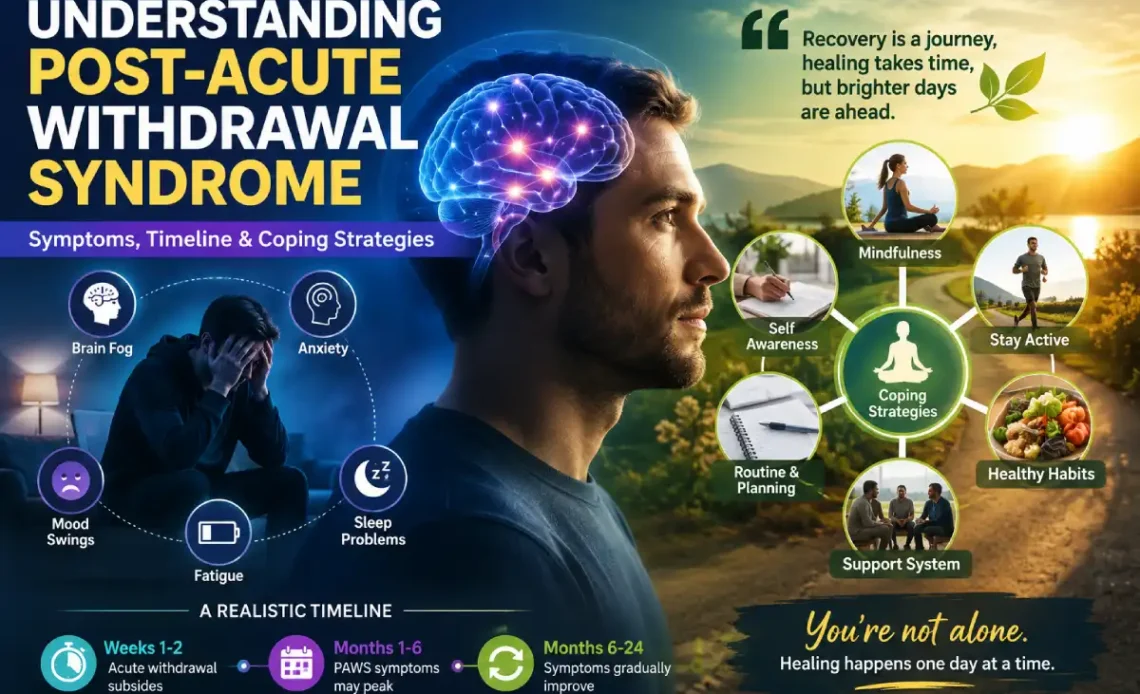
Withdrawal is how long it takes your body to readjust when you put down a drug. Acute withdrawal is what hits you like a ton of bricks hours after your last dose and gradually lessens over the next few days or weeks. Symptoms include: nausea, tremors, sweating, racing pulse – in other words the kind of stuff that shows up in the movies. Post-acute withdrawal is made up of those symptoms that are not as intense as acute withdrawal symptoms, but they can last a long time. They include: mood swings, anxiety, irritability, tiredness, variable energy, low enthusiasm, and sleeplessness.
The four symptom clusters
PAWS typically forms into four clear groups. Emotional upheaval manifests as anxiety, depression, and rage disproportionate to the situation. Nearly everyone experiences sleep disturbances, whether it’s taking a long time to fall asleep, awakening frequently in the night, or waking up and feeling exhausted. Cognitive dysfunction means you might deal with brain fog, short-term memory issues, and difficulty focusing on tasks you used to be able to do with your eyes closed. Likewise, those cravings won’t necessarily lessen over time.
The thing about these symptoms is that they tend to ebb and flow. They’re not a continuous, steady-state ordeal. You may feel totally normal for days and then have the bottom drop out for 72 hours. That lack of predictability can be extremely disorienting. Weren’t you supposed to be getting better?
A realistic timeline
Symptoms of PAWS usually emerge within the first weeks of abstinence after acute withdrawal symptoms have started to subside. They may increase in intensity between the third and sixth month mark. This is often when people are at their most confused and disheartened. They began expecting to feel a lot better and more stable, not worse!
After that, overall symptoms can remit, but sometimes they can last for 18 to 24 months. Generally, stress and triggers tend to exacerbate things, and these will continue to do so throughout the recovery period. This is not a sign of someone’s weakness. This is simply how the graph of recovery operates, and knowing that can make a person’s valley a lot less scary when they hit it.
What’s actually happening in the brain
None of these issues are related to a lack of determination; it’s just that neurobiology needs time to recover. Persistent substance abuse causes dopamine depletion and numbs natural rewards in the brain. That depletion leads to anhedonia, a condition in which a person can no longer feel pleasure from activities that used to be enjoyable, whether that’s eating, listening to music, or socializing. This, combined with low dopamine levels, leads to the feelings of apathy and lack of motivation many experience during the early stages of recovery. It’s not lack of effort; the reward system just doesn’t have enough dopamine to work properly.
In the meantime, the HPA axis (the body’s stress response system) is stuck in overdrive even after the substance is removed. Cortisol levels fluctuate more than they should, leading to intense bouts of anxiety and spur-of-the-moment decisions. The kindling effect exacerbates this problem because each previous withdrawal makes the brain more sensitive, which makes future withdrawals even worse. This is why people who have detoxed multiple times tend to have a more challenging time with PAWS than a first-timer.
The silver lining in all of this biological mess is neuroplasticity. The brain is able to rewire itself, slowly rebuilding dopamine receptors and training the stress response over the course of months. This is also what makes PAWS fade slowly over time. The brain is healing itself, and healing just takes time.
Triggers you can see coming
Most PAWS flare-ups aren’t random. They’re triggered by a fairly predictable list: stress, environmental cues tied to old using patterns, sleep deprivation, boredom, and isolation. The specifics vary by person, but the categories repeat.
The tactical move here is to map out high-risk situations before they happen rather than trying to white-knuckle through them in the moment. If Friday evenings used to be tied to using, that’s worth planning around instead of just hoping willpower holds. If a bad night’s sleep reliably precedes a rough craving day, that’s a signal to treat sleep as non-negotiable, not optional. Predicting the wave doesn’t stop it from coming, but it gives you a head start.
Daily protocols that actually move the needle
Structure of your daily routine isn’t an optional extra to recovery.
Many people in early recovery find it useful to structure their day. Getting up at the same time each day and planning the day in advance can also help to maintain a routine in your life. Routines can be comforting – they’re often described as a ‘safe space’, or the ‘security’ of knowing what’s happening next. It’s easier to make recovery and looking after yourself a priority when you’ve planned to do it.
A routine can also show you how much free time you have and help you rehearse and plan for difficult moments before they hit. You’ll notice patterns in your week – you might notice you’re most tempted to use when bored, or if you’ve not eaten well. Resources like legacyhealingnj.com can help people find structured programs that build these daily habits into a longer-term recovery plan.
Psychological tools that make the waves survivable
Cognitive behavioral therapy is considered the most effective therapy for PAWS because it focuses directly on the catastrophic thinking that symptom waves tend to trigger. A bad craving day easily turns into “I’m never going to get better” without intervention. CBT gives you a very concrete way to “catch” that thought and hold it up to the light to see if it is even true, and how you can reframe it against the actual progression of recovery.
Mindfulness-based urge surfing is a down-to-earth, self-teachable technique that I would recommend learning despite the abstract sound of it. The technique is simple: instead of fighting a craving or trying to distract from it, you observe it – notice where it sits in the body, how intense it is, and watch it rise and fall like a wave, because cravings, like PAWS symptoms generally, are time-limited even when they don’t feel that way in the moment.
Underneath both techniques is an attitude shift which is truly vital to your recovery: treating the waves of symptoms as being akin to a healing crisis rather than a relapse. A bad week isn’t a backward step. It’s the turning point in repair of the damage the drugs did, and the repair is uneven going forward.
Isolation makes everything worse
Those who attempt to go through PAWS with no help fail more often than not. Those who are connected to other recovering people in some form or another (be it 12-step, SMART Recovery, or just a recovery buddy), stay clean more often than not. This isn’t a platitude; giving up social isolationism means someone is there to say “You’re not looking so good” before a slip evolves into a full-blown relapse. It also means someone is there to provide support when a person needs it. And someone is there to provide motivation when they don’t want to do the right thing for themselves.
The main reason sober living homes work is that they isolate people from all the wrong friends, wrong routines, and wrong time of life that would constantly test their weakening resolve in the months immediately post-detox. If these benefits could be provided without sober living, it would work similarly.
When self-management isn’t enough
Coping mechanisms and adjusting your lifestyle can help you get through much of the post-acute withdrawal syndrome, but some signs indicate that you should seek professional help rather than continuing to go it alone: consistent thoughts of suicide, being unable to keep a job or relationship, or returning to use despite your best attempts and trying to follow the strategies above.
Dual diagnosis is important to mention as well. An anxiety or depressive disorder that also appears along with the addiction frequently complicates and lengthens PAWS. In most cases, it will have to be addressed in parallel to the addiction, rather than simply expecting that treating the addiction will make the mood disorder disappear. It won’t, and trying to juggle both solo tends to extend the time you spend in a depressive, anxious state with impaired function (and often drive you right back to the substance you actually developed a dependence on).
If any of those red flags are popping up in your life, therapy, sometimes medication, and facilitated peer support is your next stop. Look for a program or professional that can provide those components rather than trying to cobble a support network together on your own.
The one-and-done detox myth
Medical detoxification manages the acute physical symptoms of withdrawal but it does little to change the person’s underlying psychology and behaviors they engaged in while actively using drugs. Treating it as the finish line is where a lot of relapses start. Durable recovery generally requires a one-to-two-year commitment to the slower work: therapy, lifestyle rebuilding, and staying plugged into a support network while the brain does its rewiring.
The National Institute on Drug Abuse reports relapse rates of 40 to 60% among people treated for substance use disorders, comparable to chronic conditions like hypertension and diabetes. Unmanaged PAWS is a major driver of that number, and it’s also the most preventable piece of it. Detox gets someone sober. What happens in the months after is what tends to determine whether it lasts.
PAWS is uncomfortable, sometimes genuinely brutal, but it’s not a mystery and it’s not permanent. It follows a pattern, it responds to specific interventions, and it resolves as the brain finishes the repair work that addiction interrupted. Knowing that in advance turns a confusing, frightening stretch into something a person can actually plan for and get through.
Also Read: Keratin Treatment – Benefits, Process, Side Effects & Hair Care Guide