
Last Updated: July 7, 2026
The Indian healthcare sector has been on a digital upgrade over the past few years, and one of the key programs accelerating this movement is the ABDM National Health Authority. In essence, it’s an attempt to make our medical system more responsive and accessible with the ultimate aim of creating a universal and integrated digital health infrastructure in the country. From obtaining your first ABHA ID, digitizing your medical records to registering with your preferred hospital online – a look at how the ABDM function works may allow you to make more responsible decisions about managing your health data. Let’s examine what the ABDM National Health Authority is, how it functions, what its services are, and what to expect realistically.
What is the ABDM National Health Authority?
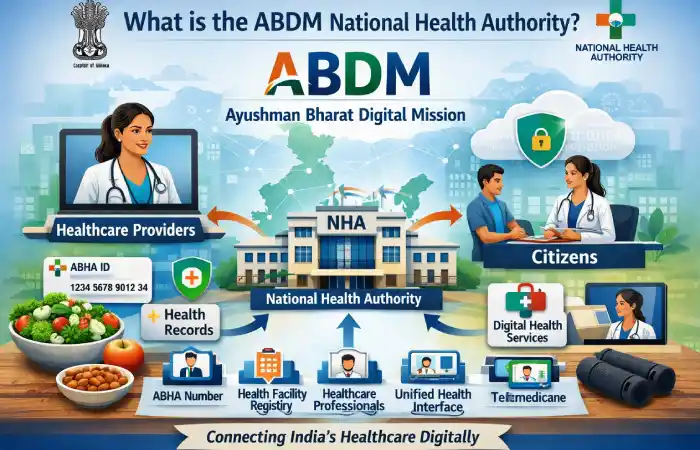
The Ayushman Bharat Digital Mission (ABDM) is India’s flagship nationwide digital health scheme. It has been rolled out by the National Health Authority (NHA), the government organization which is responsible for the various national health programmes. The mission aims to bring together on a digital platform various healthcare facilities like hospitals, laboratories, chemists and also insurance providers in a secure, encrypted manner so as to enable an exchange of the patient’s medical data between such entities.
The facility also benefits people who are fed up of collecting paper medical documents at every hospital.
With a ABHA account, a person will have his medical data recorded at one place and in a systematic manner and also the patient can give permission for sharing of that data when needed.
In simple terms
The ABDM acts as a digital bridge between:
- Patients
- Hospitals
- Clinics
- Diagnostic laboratories
- Pharmacies
- Doctors
- Health insurance providers
- Government healthcare programmes
The system is designed to improve continuity of care while giving individuals greater control over how their health information is shared.
Understanding the National Health Authority (NHA)
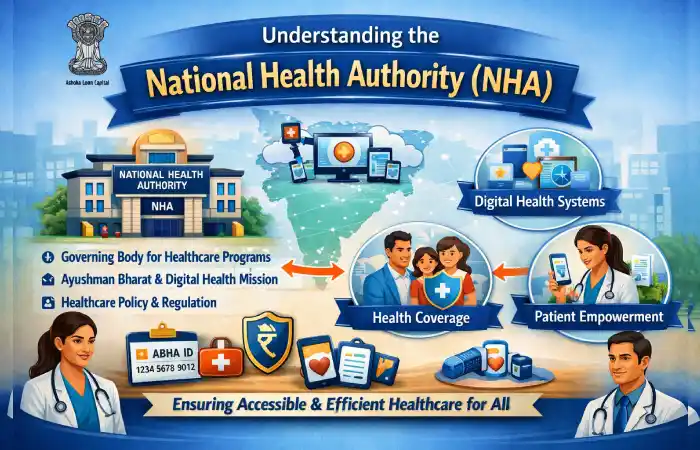
The National Health Authority (NHA) is the central government agency responsible for implementing several national healthcare initiatives, including:
- Ayushman Bharat Pradhan Mantri Jan Arogya Yojana (PM-JAY)
- Ayushman Bharat Digital Mission (ABDM)
- Digital healthcare standards
- Health data interoperability initiatives
- Digital health ecosystem governance
Rather than providing medical treatment directly, the NHA develops frameworks, policies, and technology platforms that support healthcare delivery across India.
Main Objectives of ABDM
The Ayushman Bharat Digital Mission has several long-term goals.
- Digital Health Identity
Every citizen can voluntarily create an ABHA (Ayushman Bharat Health Account), which serves as a unique digital health identifier.
- Connected Healthcare
Healthcare providers can access relevant medical information (with patient consent), reducing unnecessary repetition of tests and paperwork.
- Better Patient Experience
Patients no longer need to repeatedly carry large collections of paper prescriptions and reports between hospitals.
- Secure Data Exchange
The system focuses on secure, consent-based sharing of healthcare information rather than unrestricted access.
- Interoperability
Different hospitals and healthcare software platforms can communicate using common digital standards.
Core Components of ABDM
Several interconnected components work together within the ABDM ecosystem.
ABHA (Ayushman Bharat Health Account)
The ABHA number is a unique health identifier assigned to an individual.
It helps:
- Identify patients digitally
- Link health records
- Manage consent
- Access participating healthcare services
Creating an ABHA ID is voluntary.
Personal Health Records (PHR)
Individuals may choose to maintain their personal health records digitally.
These can include:
- Prescriptions
- Laboratory reports
- Diagnostic imaging reports
- Vaccination history
- Discharge summaries
- Consultation notes
Patients remain responsible for deciding which records they wish to link.
Healthcare Professional Registry
This registry helps identify verified healthcare professionals participating in the digital ecosystem.
Examples include:
- Doctors
- Specialists
- Dentists
- Allied healthcare professionals
The objective is to improve trust and reduce confusion regarding practitioner identity.
Health Facility Registry
Hospitals, clinics, laboratories, pharmacies, and other healthcare institutions can register within the digital ecosystem.
This makes it easier for systems to exchange healthcare information using standardised formats.
Key Services Offered Through ABDM
The ecosystem supports several digital healthcare services.
| Service | Purpose |
| ABHA Creation | Digital health identity |
| Digital Health Records | Secure storage of medical information |
| Consent Management | User-controlled record sharing |
| Healthcare Provider Discovery | Find participating facilities |
| Health Information Exchange | Secure sharing between providers |
| Digital Consultations | Supports integrated healthcare services |
| Record Linking | Connect reports from different providers |
How the ABDM Ecosystem Works
The digital workflow is designed around patient consent.
Typical Workflow
Citizen
↓
Creates ABHA ID
↓
Visits Healthcare Provider
↓
Medical Records Generated
↓
Records Linked to ABHA
↓
Patient Reviews Consent
↓
Healthcare Provider Requests Access
↓
Patient Approves or Declines
↓
Secure Information Shared
This workflow aims to give patients greater visibility into how their healthcare information is used.
Who Can Use ABDM?
The system is intended for multiple stakeholders.
Citizens
Individuals who wish to manage their healthcare records digitally.
Hospitals
Hospitals can integrate their health information systems with ABDM to improve record management and patient care.
Clinics
Small clinics can also participate, depending on their digital readiness.
Diagnostic Centres
Laboratories can issue reports digitally for easier access.
Pharmacies
Participating pharmacies may integrate prescription-related workflows where supported.
Doctors
Healthcare professionals can access authorised patient records after obtaining consent.
Major Benefits of the ABDM National Health Authority
Several potential advantages come from adopting a nationwide digital health infrastructure.
Improved Continuity of Care
Patients visiting multiple healthcare providers may no longer need to repeat their medical history from scratch if authorised records are available.
Reduced Paperwork
Digital records reduce dependence on physical prescriptions and reports.
Faster Healthcare Delivery
Doctors may obtain relevant medical information more quickly, helping improve clinical decision-making.
Better Patient Control
Unlike traditional record systems, ABDM places significant emphasis on patient consent before records are shared.
Easier Access to Medical History
Individuals can maintain a consolidated view of their healthcare journey over time.
Support for Digital Health Innovation
The ecosystem encourages healthcare technology companies to develop interoperable solutions that follow common standards.
Comparison: Traditional Healthcare Records vs ABDM Digital Health Records
| Feature | Traditional Paper Records | ABDM Digital Records |
| Storage | Physical documents | Digital records |
| Accessibility | Limited to paper copies | Accessible through authorised digital systems |
| Record Sharing | Manual | Consent-based digital sharing |
| Risk of Loss | High | Reduced with digital storage |
| Multiple Hospital Access | Difficult | Easier where integrated |
| Patient Control | Limited | Greater consent management |
| Long-term Organisation | Challenging | Easier digital organisation |
What Users Should Realistically Expect
While the ABDM represents an important advancement in India’s healthcare digitisation, users should have realistic expectations.
Not Every Hospital Is Integrated Yet
Although adoption continues to grow, not every hospital, clinic, laboratory, or pharmacy currently participates in the ABDM ecosystem. Availability may vary by region and healthcare provider.
Digital Records May Be Incomplete
If you have received treatment from providers that are not integrated with ABDM, your complete medical history may not automatically appear in your digital records.
Consent Remains Important
Healthcare providers cannot freely access your linked health information. Record sharing is designed to occur through consent-based mechanisms, giving patients greater control over their data.
Internet and Digital Literacy Matter
To make full use of ABDM services, users generally need access to a compatible digital device and sufficient familiarity with online services. Assistance may be available through participating healthcare facilities for those less comfortable with technology.
How to Create an ABHA Account
Creating an ABHA (Ayushman Bharat Health Account) is voluntary and designed to be straightforward. The process can typically be completed online in just a few minutes.
Registration Workflow
Visit the Official ABDM Portal
↓
Choose “Create ABHA”
↓
Verify Your Identity
(Aadhaar or Driving Licence)
↓
Complete OTP Verification
↓
Provide Basic Details
↓
Create Your ABHA Address (Optional)
↓
ABHA Number Generated
↓
Start Linking Health Records
Depending on the registration method, additional verification may be required to ensure the security and accuracy of your health account.
How Digital Health Records Work
Digital health records form one of the most valuable features of the ABDM ecosystem.
Instead of maintaining multiple paper files from different hospitals, individuals can store authorised medical records digitally under their ABHA account.
These records may include:
- Doctor consultation summaries
- Laboratory reports
- Blood test results
- X-ray reports
- MRI and CT scan reports
- Prescriptions
- Vaccination records
- Hospital discharge summaries
- Allergy information
- Chronic disease history
The availability of these records depends on whether the healthcare provider participates in the ABDM ecosystem and whether the patient has consented to link them.
Understanding Consent Management
One of the defining principles of ABDM is patient-controlled consent.
Healthcare information is considered sensitive personal data. Rather than allowing unrestricted access, the system is designed so that patients decide when and with whom their records are shared.
How Consent Works
- A healthcare provider requests access.
- The patient receives a consent request.
- The patient reviews the request.
- The patient approves or declines.
- Only approved information is shared.
This approach aims to give individuals greater visibility and control over their personal health information.
Privacy and Security Measures
Because healthcare records contain sensitive information, ABDM incorporates several security practices.
These include:
- Identity verification
- Secure authentication
- Consent-based data sharing
- Encrypted information exchange
- Standardised digital protocols
- Audit trails for authorised transactions
No digital system can eliminate all cybersecurity risks, but these measures are intended to reduce unauthorised access and improve trust in digital healthcare services.
Services Available Through the ABDM Ecosystem
As more organisations integrate with the platform, users may access a growing range of digital healthcare services.
These include:
| Service | Description |
| ABHA Creation | Obtain a unique digital health ID |
| Record Linking | Connect medical records from participating providers |
| Health Record Management | View and organise linked records |
| Consent Dashboard | Manage permissions for record sharing |
| Hospital Discovery | Find participating healthcare facilities |
| Doctor Discovery | Locate registered healthcare professionals |
| Digital Health Information Exchange | Secure sharing of authorised medical information |
| Integrated Healthcare Services | Connect with participating digital health applications |
The availability of individual services may vary depending on the healthcare provider and region.
Advantages of Using ABDM
Better Organisation
Instead of keeping paper reports from multiple hospitals, users can maintain a more organised digital record.
Improved Continuity of Care
Doctors may better understand previous treatments when patients choose to share relevant medical history.
Reduced Duplicate Testing
Access to previous reports may help reduce unnecessary repeat investigations in some situations.
Easier Record Retrieval
Digital records can be easier to retrieve than physical documents that may become damaged or misplaced.
Supports Healthcare Digitisation
ABDM encourages healthcare providers to adopt common digital standards, improving interoperability across the healthcare ecosystem.
Limitations to Keep in Mind
While ABDM offers many potential benefits, it is not a complete replacement for all healthcare processes.
Participation Is Still Expanding
Many hospitals and clinics are joining the ecosystem, but nationwide integration is still progressing.
Historical Records May Not Be Available
Older paper-based records usually need to be digitised before they can become part of a digital health history.
Internet Access Is Required
Many features rely on internet connectivity and compatible digital devices.
Digital Adoption Varies
Healthcare providers differ in their level of digital maturity, so user experiences may vary across institutions.
Common Use Cases
ABDM can be useful in several everyday healthcare situations.
Visiting a New Hospital
Instead of carrying multiple files, patients may choose to share relevant records digitally.
Managing Chronic Conditions
People receiving long-term treatment can keep consultations, prescriptions and investigation reports organised in one place.
Specialist Referrals
Specialists may review previous reports with patient consent, helping avoid repeated paperwork.
Family Healthcare Management
Parents or caregivers may find digital record management more convenient when coordinating healthcare for family members, where applicable.
Who Should Use ABDM?
ABDM may be particularly beneficial for:
- Individuals with ongoing medical conditions
- Patients who frequently visit different hospitals
- Families managing healthcare records
- People who prefer digital document management
- Individuals relocating between cities
- Senior citizens with assistance from caregivers
- Healthcare professionals using participating systems
Who May Benefit Less?
Some users may find limited immediate benefit if:
- Their local healthcare providers are not yet integrated.
- They rarely require medical services.
- They prefer paper-based record keeping.
- They have limited access to digital devices or internet connectivity.
As adoption grows, the usefulness of the ecosystem may increase for a wider range of users.
FAQ’s
What is the ABDM National Health Authority?
The ABDM National Health Authority refers to the Ayushman Bharat Digital Mission managed by the National Health Authority to build India’s digital healthcare ecosystem.
Is creating an ABHA account mandatory?
No. Creating an ABHA account is voluntary.
Is ABDM free to use?
Creating an ABHA account and accessing core digital health services is generally available without any registration fee, although healthcare services themselves may have their own costs.
Can everyone in India create an ABHA account?
Eligible individuals who meet the identification requirements can generally create an ABHA account through the official process.
Are my health records automatically shared?
No. Health information is intended to be shared through consent-based mechanisms, allowing you to approve or decline access requests.
Can I use ABDM on my smartphone?
Yes. Many ABDM services are designed to work on smartphones as well as other internet-enabled devices.
Conclusion
With the launch of ABDM, National Health Authority marks an significant milestone towards developing a robust, seamlessly connected and patient-centric digital health ecosystem in India. By providing secure digital identities, enabling consented health record sharing and bringing in the required inter-operability between different healthcare entities, the move seeks to make healthcare journey much simpler while empowering the patient. However, it is essential that users set themselves realistic expectations, for it continues to grow and the services can be readily availed across hospitals, clinics, labs and many other organisations. As ABDM’s network of providers expand with maturity, the integrated digital health ecosystem shall become more impactful in making healthcare accessible, convenient and continuos across India.