
Last Updated: May 12, 2026
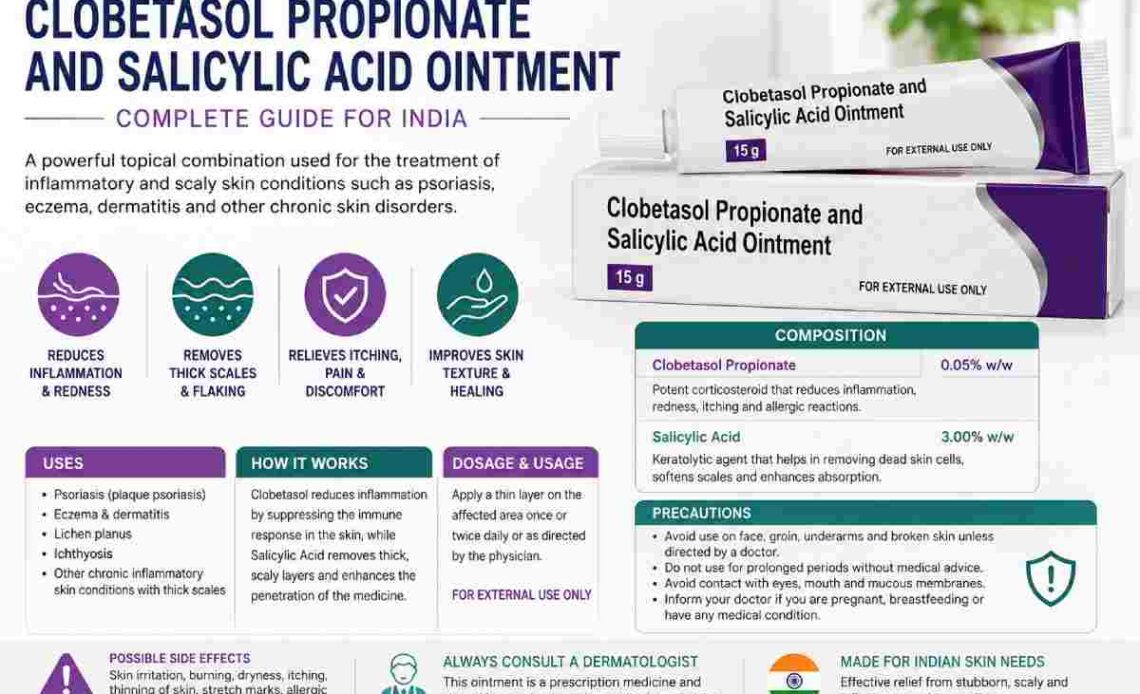
Clobetasol propionate and salicylic acid ointment is a strong skin medicine that can soothe the itch and inflammation caused by clobetasol, while simultaneously loosening thick, scaled skin with salicylic acid. These two combined can be very useful for thick plaques with refractory scale, such as those seen with psoriasis, where de-scaling can help facilitate delivery of the steroid to the skin. A strong combination of a steroid with salicylic acid has been included as an option in the Indian national guideline for treatment of thick plaques.
What Is Clobetasol Propionate and Salicylic Acid Ointment?
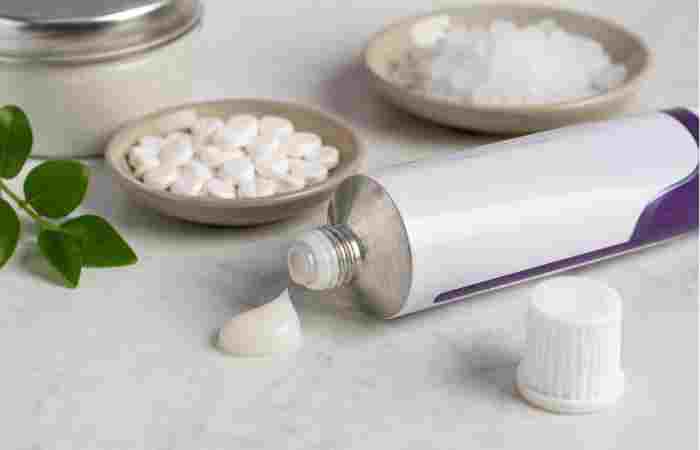
Basically, a “two-step aid” is delivered in a single tube. Clobetasol propionate is a very potent topical corticosteroid, and is often used for inflamed skin conditions such as psoriasis and eczema, and salicylic acid is a kerolytic agent, helping to break up and slough off dead skin, enabling the other medication to become more effective. This means that this combination of two ingredients is usually used to help treat long-standing dry, scaly patches rather than for every day type rash.
How It Works
| Ingredient | Main role | Why it matters |
| Clobetasol propionate | Potent anti-inflammatory steriod | Helps control redness, itchiness, swelling, pain and inflammation associated with steroid-responsive skin disorders. |
| Salicylic acid | Keratolytic or scale softening agent | Aid the removal of the thick scaly skin, can improve absorption of the steroid into plaques. |
Combination therapy. Used when lesions are hyperkeratotic and resistant. According to guidance in dermatology salicylic acid will break down the scales, soften the plaques and use with a steroid may allow better penetration and efficacy. A potent steroid–salicylic acid combination is mentioned for use in psoriasis, including thicker lesions if necessary, in Indian treatment workflow guidance.
Common Uses in India
This cream is sometimes spoken about in a general sense when people are referring to psoriasis, more specifically where the scales are thick, on the elbow, knees, legs or at the front hairline. However, this cream might also sometimes be prescribed by doctors in other types of steroid sensitive inflammatory skin disease, where there is also a need to get rid of the scales. Clobetasol is used to help with certain skin complaints such as eczema and psoriasis which make the skin dry, red, itchy, crusty, flaky and sore.
When This Ointment Makes Sense
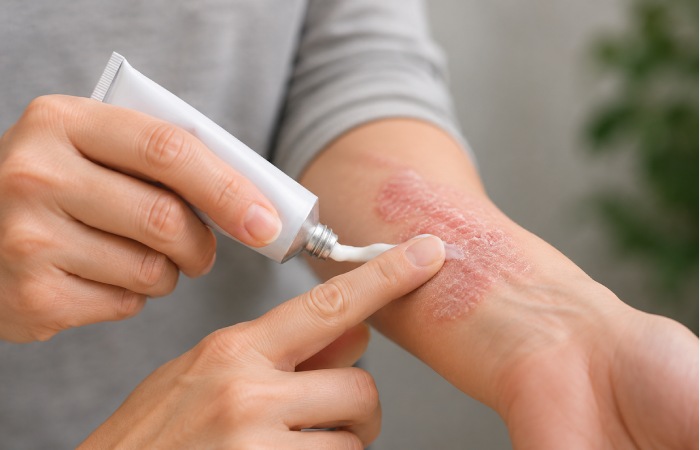
It is a good choice when the skin is not only red but is thickened, hardened, and possesses heavy scaling. Those scales will form a barrier that prevents the active medicine from penetrating the diseased skin; so removing it is very helpful for getting medicine applied effectively to the diseased skin. Topical corticosteroids are one of the conventional treatment choices for plaque psoriasis, and salicylic acid is added when scale is a significant problem.
Comparison Table: Combination Ointment vs Other Options
| Treatment option | Best for | Main advantage | Main limitation |
| Clobetasol propionate + salicylic acid ointment | Thick, scaly, red, inflamed patches | Treats both inflammation and scale simultaneously, might also increase penetration. | Requires careful administration as clobetasol is a very potent corticosteroid and salicylic acid can cause irritation and be toxic if too much is applied. |
| Clobetasol alone | A slightly scaled red itchy inflamed patch | Good very strong anti-inflammatory action | Cannot deal with heavy scale as well, long-term use will lead to thin skin or stretch marks |
| Salicylic acid alone | Thick scale, rough patches, warts, callus-like buildup | Excellent scale softener and keratolytic. | Does not control inflammation as powerfully as a steroid. |
| Moisturizer/emollient | Dry skin, mild flaking, maintenance care | Gentle, soothing, helps support the skin barrier. | Usually not enough for severe plaques or active inflammation. |
How to Use It Safely
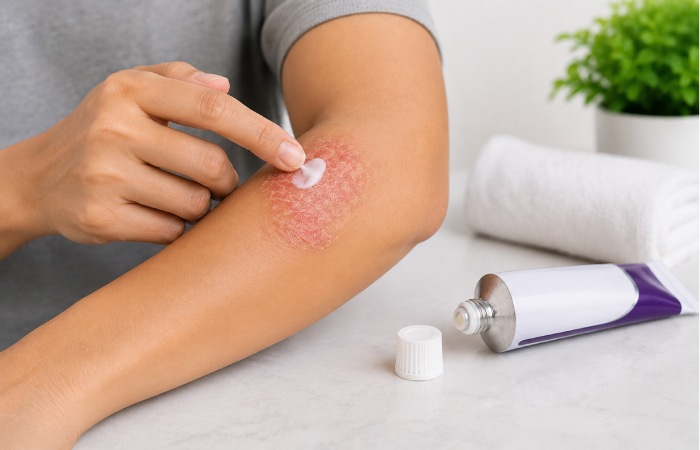
Take as prescribed. Clobetasol is an extremely potent steroid and the leaflet recommends that it is used sparingly, only on face, axillae and groins if directed by your doctor, not with an occlusive dressing unless instructed to do so by your doctor and only for the period prescribed. It states within the NHS guidelines that one to two applications a day for a short period is typically required for Clobetasol and that it is preferable prescribed as an ointment on dry, flaky skin.
A simple way to remember safe use is this:
- apply a thin layer only on the affected skin, not on healthy skin;
- do not overuse, because longer or larger-area use increases the risk of absorption and side effects;
- do not cover the area unless your doctor tells you to; occlusion can increase potency and side effects.
Possible Side Effects
As with all potent skin preparations, side effects may occur. At the time of application of Clobetasol, burning and stinging are reported by patients, and with chronic use, thin skin, striae, and the many problems associated with prolonged steroid use may develop. According to FDA labeling, “Clobetasol is very potent… And can depress the HPA axis with long-term use, extensive use, or with occlusive use.”
Salicylic acid, when applied topically to the skin can also cause local irritation. Skin irritation and stinging are known side effects (MedlinePlus, Mayo Clinic). Increased use in large areas and overdose can cause systemic salicylate toxicity, particularly in patients with kidney or liver dysfunction, diabetes, damaged or irritated skin, and large treatment areas.
Who Should Be Extra Careful
This is not an ointment to use light heartedly. Extreme caution should be taken if there is a skin infection, broken skin, sensitive skin, or skin on the face. Clobetasol is likely to worsen skin infections and salicylic acid will severely irritate inflamed/infected skin. Systemic steroid effects in children should be taken seriously, and there are warnings regarding the topical application of salicylic acid in children and adolescents suffering with flu or chickenpox due to Reye’s syndrome.
A Practical India-Focused View
In Indian psoriasis care, this type of combination appears in standard treatment workflow guidance, especially for thick plaques where scale removal is needed and stronger local treatment is appropriate. That does not mean it is a “daily-use” skin cream; it is better thought of as a targeted medicine for a specific problem, usually under dermatologist supervision.
Do and Don’t Guide
Do
- Use only on the area your doctor has told you to treat;
- Keep the layer thin and limited to active plaques;
- Tell your doctor if you have diabetes, kidney disease, liver disease, skin infection, or very sensitive skin.
Don’t
- Do not apply it on the face, groin, or underarms unless specifically prescribed;
- Do not use it for long periods without review;
- Do not increase the frequency just because the plaques look thick or stubborn. More is not better with clobetasol.
Another Useful Comparison: Combination vs. Gentle Support Care
| Care type | What it offers | When it helps |
| Strong medicated ointment | Rapid anti-inflammatory effect plus scale removal | Flare-ups with thick, raised plaques. |
| Moisturizers and petrolatum | Softens dryness and supports skin barrier | Daily maintenance and mild dryness; Indian psoriasis workflow starts with petrolatum as part of care. |
Final Word
A combination Clobetasol propionate/Salicylic acid ointment can also be extremely useful in cases of inflammation, where there is either psoriasis, or a comparable inflammatory condition associated with non-responsive scales or thick plaques. The steroid should control the inflammation/itching, while the salicylic acid breaks down any excess scales obstructing treatment. Although an excellent treatment in the correct circumstance, without appropriate management, it has the potential to be irritating or lead to other steroid-mediated adverse events. This preparation works well with an appropriate plan, a suitable timeframe, and with the advice of a doctor.